Posts

Showing posts with the label customer experience

Remove a failed dental implant: why it happens and what it consists of
Image
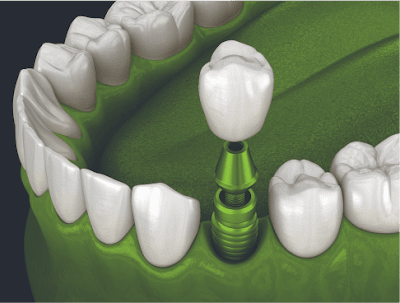
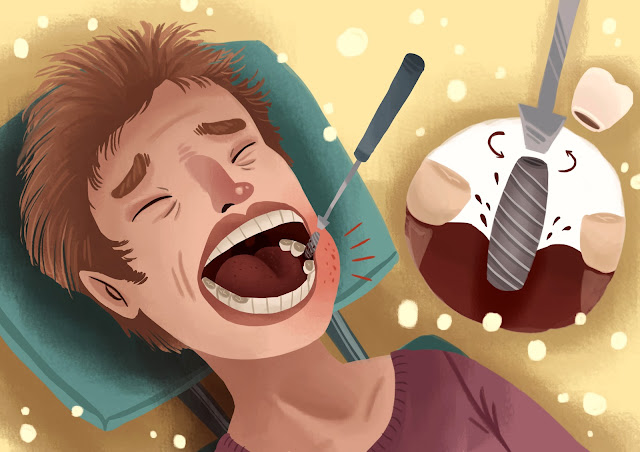
Did the dentist tell you that your implant is lost and should be removed? What are the causes of this failure? Let's find out together what is to remove a failed dental implant. In the last decade, implantology has reached very high levels in terms of guarantee, success, and safety. However, it can happen that that much-coveted facility that you have entered, at a certain distance of time, goes bankrupt. In such cases, the only possible treatment is the removal of the screw. Only later will it be possible to assess whether the area may be suitable for second implant surgery or for a different treatment. Why remove a dental implant The greatest fear of those who must undergo implant surgery is the risk of losing the implant. In fact, over time a series of biological or prosthetic problems can occur that require their removal. Generally in the first 5 years from the insertion of the vine, the biological problems prevail (lack of osseointegration, mucositis, peri-impla...

Safety for the patient

Each person has its own characteristics, its problems, its needs, and only through the realization of an individual care plan that takes into account the specific characteristics of each individual can we arrive at the best therapeutic solution suitable for a specific patient. The Dentist is the Medical Specialist of the diseases of the mouth, but only a few know this by associating the figure of the dentist with a dentist.  The mouth is composed of hard tissues (teeth) and soft tissues (gums, tongue, muscles) that together constitute the oral cavity and the care of all these anatomical components is the responsibility of the Dentist. Only with a careful analysis of the clinical situation that results from a scrupulous visit of the soft and hard tissues of the mouth by the Specialist Doctor can a correct treatment plan be reached that allows an effective and lasting cure over time, but above all safe for your health. The Movement for the protection of Private Dentistry and...

Digital dentistry: Is this the future of dentistry?

Image
The connotations of being past the year 2020 bring about thoughts of futuristic concepts as suggested by movies, the Internet, and a vast array of media.  Movies and books, set in a time period only a few decades forward, have portrayed a life filled with advanced medicine, travel, engineering, manufacturing, and even rapid and simple food production. Yet, when we reach that future date, we observe that technology doesn’t change as fast as our minds imagine. Does dentistry today — often termed “digital dentistry” — represent the high-tech, easy-to-implement solutions that were imagined and written about 30 years ago or even last year? Clinicians with decades of experience or the student of dental history can look back at the advances in dentistry and state clearly that the dental profession has experienced an exciting amount of technological growth. Yet in comparison to medicine, biomedical engineering, automotive and aeronautics, rapid manufacturing, electron...

How Can We Make a Dentist Promotion in Ethical Mode?

Image
It is increasingly common to see particularly attractive advertisements for dental shops that promise seas and mountains at bargain prices. Notwithstanding that then, systematically, most of the patients who come from them go out with a loan of several thousand euros ... Now beyond the quality of performance that these structures can provide, there are 2 aspects to reflect on: These centers have no business risk: advance payment of benefits and iron contracts that protect them from any legal event. Patients who go to them are of a medium / high social bracket so much so that they can also obtain financing of tens of thousands of euro. This means that trying to compete with them at low prices without having an internal salesman capable of selling to the Patient other services to raise the budget and have him sign a real sales contract (which is very different from an estimate) is a battle lost at the start ... or rather a suicide! But it also means that it is not only the poore...

Dentistry is a medical specialty not a business.

Image
Many patients ask us why the dentist charges the first visit, while in the so-called "dental centers" they do not pay for it and even some even do the X-ray for free. To be able to answer this question it is necessary to understand the different nature and purpose of dental centers and dentists. Dental office centers have the sole purpose of benefiting from the sale of dental services, while the dentist's doctor has as its purpose the protection of the health of the patient's mouth and the profit is only a natural consequence of the care he performs, like other doctors medical specialists. It follows that dental centers use this mechanism of the free visit, only to be able to sell a greater quantity of medical services in order to obtain the greatest possible profit. It is common for a patient who is first visiting one of these centers to always find therapies to do and obviously always those that have a higher cost because these centers need to cover adverti...

Tooth clenching: here are all the secrets of bruxism

Image
Did your dentist tell you you're clenching or grinding your teeth? Do you often have sore muscles in the morning? Most likely you may suffer from tooth clenching, one of the two manifestations of bruxism along with grinding. According to a 2013 scientific article entitled "Bruxism defined and graded: an international consensus" published in the Journal of Oral Rehabilitation, bruxism is defined as a repetitive activity of masticatory muscles characterized by grinding or clenching of teeth and/or tension jaw thrust. Classifications of bruxism Bruxism is part of the parafunctional habits and can be classified according to the type of movement and the period of the day in which it occurs. It is distinguished in: 1 - static bruxism (clenching), characterized by the clenching of teeth; 2 - dynamic bruxism (grinding), ie the grinding of the arches. In addition, we talk about diurnal bruxism when the frame or grinding occurs during daylight hours, while it is ...

The most frequent dental solution today is the dental implant

Image
Neglected cavities, fractures, gum disease like periodontitis, and one or more teeth that can weaken and fall. The most frequent solution today is the dental implant: according to the latest data from the Academy of Osseointegration, every year in Costa Rica several hundreds of thousands of implant surgeries are made, a fact that places our country at the level of the biggest countries to draw on the method. Yet, around this technique so widespread (it is estimated that about two dentists out of three usually do it) still circulate fears and perplexities, fortunately almost always unjustified. To dispel any doubt, we asked prominent Prosthodontist Dr. Alejandro Freer R., DDS; MDS; Prosthodontist of Freer Dental Implant Center to answer all the most widespread and crucial questions on the subject. 1. Can you place dental implants with infection or gum problems? "In the case of infection, the implant can only be assembled after eliminating all traces of infection. If, on...